Showing posts with label Food. Show all posts

Tuesday, November 20, 2012

Mexican Dinner time! Tinga de Pollo

We've come across very few places to get good Mexican food in Berlin so far. There are so many Mexican restaurants, or should I say Mexican 'themed' restaurants as most of them are run by non-Mexicans, but very few of them are authentic and most of them disappoint with their bland, tex-mex style food. There is even an Indian-slash-Mexican restaurant in Rosenthaler Platz which although it sounds appealing (as a combination of two of my favourite styles of food) somehow it doesn't seem like it could work. So, the only way to get my fix for Mexican food is the make it at home.

A few weekends ago we decided it was time to make a Mexican dinner again and for me to try out making 'Tinga' (chicken with tomato and chipotle chiles). I've been dying to try it out even since my sister-in-law gave me the recipe when we visited Mexico back in February. So, we invited a couple of good friends over for dinner and went about preparations.

The finished 'Tinga' ready to serve
Tinga takes quite a while to prepare as you have to boil the chicken for at least an hour and then shred it (this can be a particularly arduous process if you are cooking for a big group of people) as well as slow-roast the tomatoes and then mix and chop all the other ingredients together the make the 'salsa'. So, we started out by going to the marvelously huge "Real" supermarket at Frankfurter Tor the afternoon of the dinner. We bought the rather overpriced but necessary tortillas (Tinga should be accompanied by maize as opposed to flour tortillas), the chicken thighs and the other 'Mexicany' spices and chillies needed.

The chicken thighs boiling away with garlic and some parsley we had left over
When we arrived back at home I got to work boiling the chicken. I had searched through my papers to find the rather tatty and (as I shortly found out) confusing notes that I had taken nearly a year ago in Mexico. At the time of taking the notes I was trying to follow the 'live demonstration' which was dictated to me in Spanish so my recipe notes had come out as a very messy mix of English and Spanish. My brain wasn't very good at translating and writing at the same time and couldn't decide which language to write in or indeed how to form a proper sentence in either one!

Can anyone make sense out of my recipe notes?
The Mexican cooking device called a 'comal' (kind of like a flat pan placed on the hob) is used for many things in the Mexican kitchen including heating up tortillas and roasting tomatoes for Tinga. So I got started with roasting the tomatoes and enjoyed using my comal for the first time (thanks Odila for giving it to me).

The Chicken boiling and the tomatoes roasting
After spending what felt like an eternity shredding the chicken, the next steps in making the sauce were fairy straight forward and fast as it was basically just a question of throwing it all a bowl and blending it all together.

Spices, garlic and red chillies ready to hit the blender

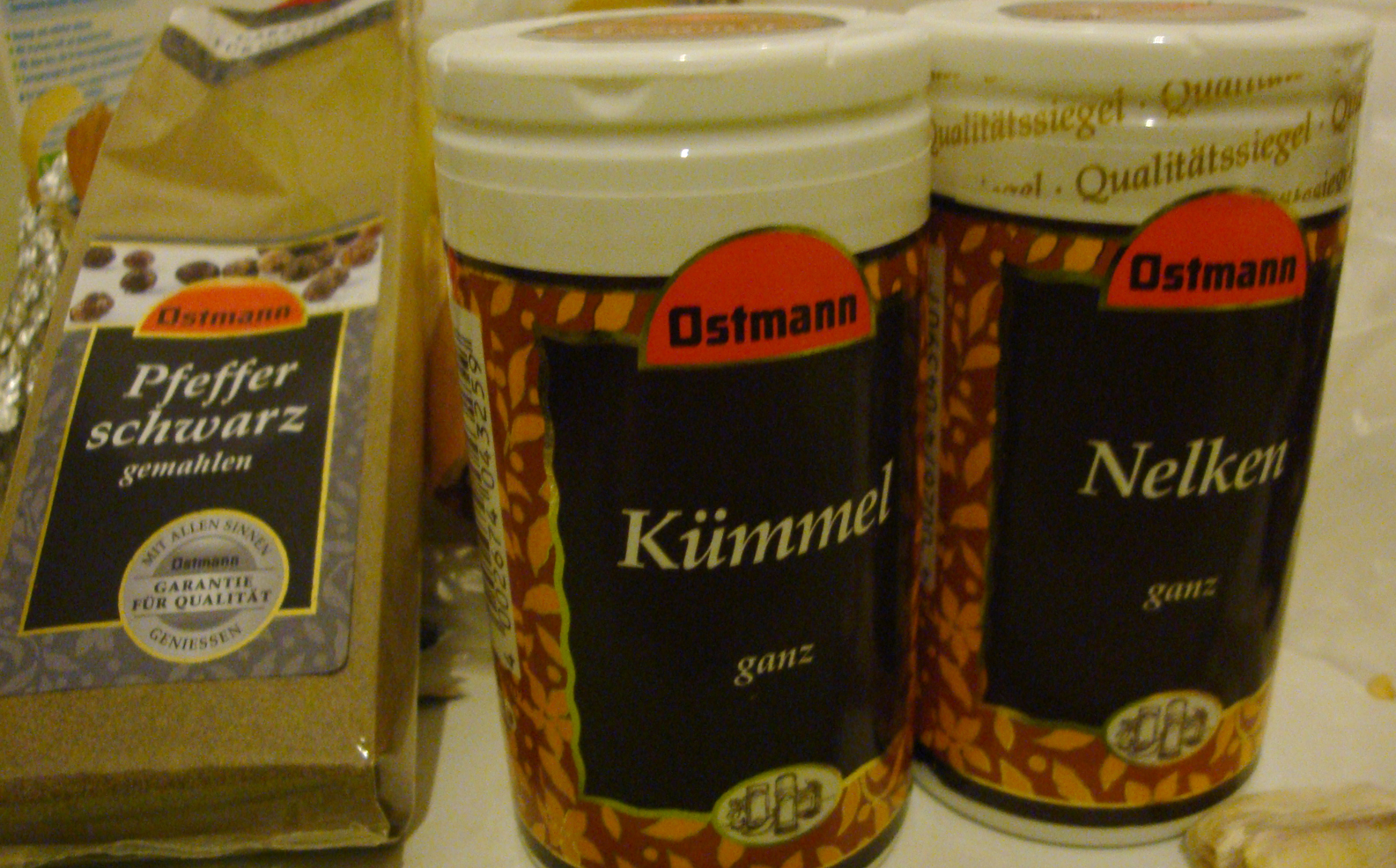
Pepper, Cumin and Cloves for the sauce
Blending it all together
All in all it took a good couple of hours to prepare but it was worth the effort and our guests seemed quite impressed with it too. It wasn't the same as my sister-in-law's authentic version but the main reason (apart from my terrible note taking abilities) was because we didn't have any proper chipotle and used a sauce flavoured as chipotle instead. If anyone knows where to get chipotle in Berlin, please let me know! It was definitely delicious though and tasted even better the next day as left-overs.

I've attached the recipe to this post too in case you dare follow my instructions and attempt to make this delicious dish. 

Tinga de Pollo

Here is my (very approximate) version of the Tinga recipe. I recommend you try making it yourself as it is very yummy but I can't be responsible for the outcome!

Serves four people (probably)
Cooking time - 2 hours (mas o menos)
n.b. - although the quantities of the ingredients looks like I know what I am talking about, all quantities are actually completely made up as I don't have a clue what ratio they should be in. So, experiment and see what happens! 

Ingredients:

x4 Chicken thighs
x4 cloves of garlic (whole)
x6 medium tomatoes
x4 medium onions
a pinch or two of salt
a pinch or two of Black pepper
Chile Chipotle (canned)*
Cloves
Cumin
a splash of cold water
Vegetable oil
White pepper

To serve:

maize tortillas
fresh lime
creme fraise or sour cream


*We didn't actually have any Chipotle this time but we replaced it with Chipotle flavoured Tabasco sauce and a chopped up random red chilly we found in the supermarket which is obviously not the same but did the job well enough to make the dish edible and spicy!   

** If you don't have a comal you can always use a frying pan or roast them in the oven. 

Instructions: 


  • Boil the chicken in a saucepan with a clove or two of garlic until cooked - at least 45 minutes on a medium to low heat. Remove from water and leave to cool. Once the chicken is cooled, shread it by hand into thin strips and set aside. 


  • Whilst the chicken is boiling, slow roast the tomatoes (whole) on a medium heat on a comal**. Don't add any oil or butter. Turn as needed to roast on all sides until browned - at least 45 minutes cooking time is needed. 


  • Chop the onions into fairly large strips and fry in oil on a medium low heat until transparent and a little browned. 


  • Fry the shredded chicken in vegetable oil and add a little white pepper. 


  • Prepare a blender with the salt, black pepper, chipotle, cloves, cumin and water. Add the roasted tomatoes and blend together until smooth. I have no idea what combination or quantities these spices are supposed to be mixed in as I didn't make any notes about that so you're on your own here. I suppose it depends on how spicy or sweet you like your food.  


  • Add the blended sauce to the onions and mix together. Then add the fried chicken and make sure it is all mixed together well. Leave to simmer. Actually I skipped this part of the instructions so just let it simmer until you get hungry or bored and then serve.  


To serve, put a spoon of Tinga on a heated tortilla, add a squeeze of lime and a spoon of creme fraise, fold or roll the tortilla and eat. The best way to eat a taco of Tinga is with your hands, you might experience an explosion of Tinga everywhere (there really is a trick to being able to eat tacos without having to shower afterwards) but using knives and forks is CHEATING!

If you do decide (or dare) to try following my recipe please let me know how it turns out. If it is a disaster, you can always call a pizza or get one of the many yummy Berlin kebabs instead!  

Monday, September 17, 2012

The Pratergarten: Drink and Be Merry!


You can't and probably shouldn't live in Germany for long without experiencing the Biergarten (beer garden) culture. Hummmm...It's only taken me six months! The only experience I have ever had of this type of drinking 'arrangement' was in Madrid a couple of years ago at the famous Plaza de Toros de las Ventas (Madrid largest bullring) where they used to host an annual Oktoberfest-style "Feria de La Cerveza". I don't remember the whole event clearly but I do remember lots of German beer, sausages, long tables and German Oom-pah music. I also woke up with an over-sized beer glass in my house the next day so I must have had a good time!

I had the opportunity recently to experience something closer to the real deal at the PraterGarten in Prenzlauer Berg, Berlin. I've now been to the Pratergarten twice, once in the evening and once in the daytime. Both times it was fairly quiet (due to my choice of unsociable drinking times!) but I enjoyed it nonetheless. The beer is maybe a little over-priced compared to other bars in the area but you are paying for the location. I think it is also fairly 'touristy' too and it attracts a more international crowd more than locals.    


The Pratergarten dates back to 1837 when beer was first served at the location and in 1852 it became a place of all-round leisure activities. It became a well established performance venue hosting theater, ballroom and political events. 

The Biergarten itself is an impressive size with lots of wooden trestle tables set out in rows (fairly typical biergarten stuff I suppose). There is a stage area which I assume they use from time to time for bands or live entertainment although I didn't see it in use. There are a few self-service bars where you buy beer, sausages and pretzels and also a more formal restaurant area.  


The history of the German Biergarten is an interesting one and merits it's own dedicated blog (watch this space). Of course, we are all familiar with the most famous beer-related celebration of them all, Oktoberfest in Munich. I don't have enough money or stamina right now to visit Munich so the Pratergarten will just have to do for now. 

Do you have a favourite Beer Garden in Berlin?

Wednesday, August 8, 2012

The (Second) Best Kebap in Berlin


When searching for that perfect kebab in Berlin most people will tell you to head to Mehringdamm to Mustafas Gemüsekebap. If you want to get a similar döner experience but without having to wait in the queues that are typical at Mustafas then we know just the place for you.

The Nur Gemüse-Kebap stand on Hermanstrasse in Neukölln is, what has been described to us as, "the second best kebap shop in Berlin". That description was good enough to get me drooling so we took a little trip to Hermanstrasse to get our fingers greasy. The stand itself is right on the entrance to the Hermanstrasse S-bahn at the center of all the Hermanstrasse transport links so it's very easy to find. The staff are friendly and speak at least enough kebap-related English to make ordering easy for dummies.

A Dürüm kebap before it is wrapped.
We decided to try out a typical döner kebap and, my favourite, a dürüm kebap. The dürüm has the same ingredients as the döner but is rolled up inside a toasted flatbread called lavaş rather than being served in the normal bread roll. It is a little more expensive (normally about 1 euro more) than a typical döner but it's worth it in my opinion.

A döner kebap with a Turkish yogurt drink, Ayran.
I am no stranger to kebaps. In fact, I have spent many a drunken walk home biting into a spicy döner and countless Saturday afternoons curing a hangover with a tasty dürüm. I have eaten good ones and the truely terrible ones. I've experienced döners that have been cold, soggy and undercooked, with too little sauce or meat but I must say that the Nur Gemüse Döner has to be one of the best, if not THE best, kebaps I have ever eaten. I have not yet been to Mustafas and I do know that the Nur Gemüse style is a copy so I will have to wait till my next visit to Mehringdamm to compare the two.

 
I think what made this kebap different is that I could tell the meat was good quality. It was not as processed as other döner meat I have tried. Maybe the fact it is chicken rather than lamb makes it taste different too as most kebaps I have eaten have been lamb or a mixture of lamb and chicken. The addition of red peppers layered with the meat on the spit keeps the meat juicy and flavoursome. Also, it's the first kebap I have tried where they add roasted vegetables to the mix and a dash of lime juice at the end.


Not only are the ingredients good quality and fresh but the combination of ingredients is balanced with just the right amount of meat to salad ratio. The sauces are also good with a choice of spicy, garlic and normal sauce and their flavours are not too strong or light. I recommend trying it with a Turkish yogurt drink called Ayran. For me it was a little too salty but the cool drink is a refreshing compliament to the heavy flavours of the kebap.

If you want to try their kebaps for yourself I believe that it is open every day and closes at around 10pm.

Here is the address and contact details: 
S-Bahn - Hermanstrasse
U-Bahn - Line 8 Hermanstrasse
Hermannstraße 113 , 12051 Neukölln Berlin
Tel: 0163 7877 439
nur-gemuese-kebap@gmx.de 

Monday, July 30, 2012

Little Vietnam: The Dong Xuan Center


We decided to go and visit the Dong Xuan Center after reading this BBC article about it through Twitter. Being big fans of Asian food, we just had to take a look. We went there on a sunny Saturday Berlin morning with no real agenda in mind, only to see what it had in store for our senses. The center is the heart of the 20,000-strong Vietnamese community in Berlin and hosts many services for that community including lawyers, driving schools and travel agencies. It is also the place to buy all kinds of  Asian foods, merchandise and imported products in the city.  


It's pretty easy to get to on the tram. Line 8 drops you right outside at 'Herzbergstr/Industriegebiet' in Lichtenberg. After walking under the plastic yellow arch of welcoming letters, we were faced with a series of huge warehouses. We chose the closest one, number 8, and stepped inside. The first place we went in sold all kinds of food products and was similar to the 'chino' supermarkets and bazaars we were used to in Madrid, Spain.  There were many kinds of fresh weird-looking vegetables, lots of thai spice pastes and some random trinkets and household products. 


As we continued our tour of the warehouses we encountered, amongst lots of other products, some well priced ping pong bats, novelty toilet seats and sunglasses for 5 euros! The stretching corridors went on and on and presented us with streams of clothing retailers, shoe shops, hairdressers, manicure stands and food stores. 


Although the majority of the supermarkets sold Asian food, we discovered a small Indian shop which sold imported spices, curry pastes, chapatis and incense. I assume most of the stuff was imported from the UK as we have many Indian food brands there and most labels were in English. We started to get a bit peckish so we tried out a fresh samosa which the friendly shop assistant warmed up for us. It was very tasty.


After whetting our appetite we headed outside again to one of the Vietnamese restaurants, Linh Chi Quán, and found a place to sit outside. Our first problem was that the menu was in Vietnamese and German, two languages we have very little experience of. Exasperated after trying to communicate what we fancied eating to the waitress we decided to choose one dish with a pretty name which included chicken (the first German 'food'-word that I could think of!). I did try out some sign language with the waitress, but she didn't seemed to talk any language at all, unfortunately for me, that included body language. The second dish was decided upon by pointing at another customer's food and then a nice big thumbs up! A lot of friendly smiles and head nodding later, we sat back to wait for our food. 


I have to say that it was a very good meal. The chicken dish (I believe it was called 'Bún Ga Măng Mọc') was a noodle soup with bambu and red chillies and the other dish (I think that one was called 'Đậu Phụ Sốt Cay') was sweet chilli style tofu. The portions were huge and the price was pretty reasonable too. It only set us back about 15 euros for both dishes.   


All in all, it is well worth a visit, especially if you fancy buying a novelty toilet seat, getting your nails done or if you want to eat some good quality, cheap Asian food. 

The Dong Xuan Center is open every day of the week apart from Tuesday from 11:00 to 20:00. 

Herzbergstraße 128 – 139 
10365,
Lichtenberg, Berlin
 (+49) 30 – 55 15 20 38 


Wednesday, July 11, 2012

German Idioms: Sausages


I recently discovered that there are a surprising amount of German idioms involving sausages! Well, it’s not really that surprising considering that there are over 1,000 different types of sausages in Germany!

Author - Peng 13:23, 6 August 2007 (UTC)

I just had to walk into my small local supermarket to appreciate the huge variety on offer. In fact the selection of German sausages is so huge that it’s difficult to choose which one to buy, especially when you don’ know the difference between Kochwurst, Rotwurst, Beutelwurst, Rohwurst, Brühwurst, Würstchen, Bochwurst and Frankfurter (now that one I do know!).


Anyway, maybe I’ll do a post about actual sausages once I do my research and try some of them out. In the meantime, here are a few fun sausagey idioms for you.

"In der Not schmeckt die Wurst auch ohne Brot"
In hardship, the sausage is just as delicious without bread

"Alles hat ein Ende, nur die Wurst hat zwei"
Everything has an end, only sausages have two

"Es geht um die Wurst/Wurscht"
It’s a matter of sausage (do or die)

"Das ist mir wurst"
That's sausage to me (I couldn't care less) 

So, I hope that wasn't all "sausage" to you. This is the end of the post. After all, everything has an end...except sausages, of course!


Monday, July 2, 2012

My First Food Exchange


We were recently involved in what can only be described as a “food exchange” with some of the lovely German people we have met in Berlin. A few weeks ago we invited them to our house for a home cooked Mexican meal as they had a thirst for Mexican cuisine after visiting Tijana the previous year. I had a lot of hostessy things to do (mainly drinking, I mean, supplying beer and conversation) so my husband got down to work in the kitchen to prepare a “Red Mole”. Mole (pronounced "mo-ley" not like the burrowing creature!) is a traditional Mexican chicken dish prepared with a paste made from a ridiculous variety of chillies and chocolate. Yes, you read it right, chocolate! By the way, my husband is actually Mexican so that is the reason he cooked, honestly!


Anyway, the focus of my blog isn’t Mexican food, but German food. I realised during dinner that I had very little idea of what German food actually is, so we got into a conversation about it with our German guests. The original conversation about German food was worrying as my friends told me that they rarely prepared German food describing some dishes as vomit-like! However, I was not deterred and after the spicy Mole dinner they kindly invited us over the next week to exchange the favour and flavours.


We started with a "Kartoffelsuppe" which is a creamy potato soup with small pieces of ham and served with croutons. It was delicious!


The second course tasted of Christmas and reminded me of mum’s festive dinners. I think this was due to the "Rotkohl", or red cabbage, which was slow-cooked and prepared with orange, laurel and cardamen. Accompanying the cabbage were some thick slices of roast pork or "Schweinebraten" and some more potatoes called "Knödel". These potato dumplings are made of mashed potato mixed with bread and shaped into balls. They were fantastic. Dribbled on top of it all was some meat gravy. Ahhh Bisto!


I think my favourite part of the meal had to be the dessert. Even though all those potatos were swishing around in my stomach (Potatoes are a staple of the traditional German diet), I couldn’t stop eating the "Rote Grütze" or red fruit jelly! This dish is very typical from the north of Germany and Scandinavia (my friends are from Lübeck in the north). It is a sweet jelly with strawberries and cherries. You can also find a green fruit jelly that has, well, green fruit instead of red. By the way, if you don’t like cherries, Germany is the wrong contry for you as pretty much everything is available in cherry flavor! My hosts told me that “Rote Grütze” can actually be bought pre-made in the supermarket so I will definitely be on the look out for it. To top it all off was a delicious vanilla sauce or "Vanillesauce" that was prepared with fresh vanilla pods. Divine!

All in all, my first experience of home-cooked German food was a very pleasant one. I can assure you, and my German hosts, that none of the food I tried was at all like eating vomit and my opinion of German food so far is a positive one! If any other German’s would like to do a “food exchange” just get in touch and I’ll send my husband back to the kitchen!!!

What is your favourite German food? Do you have any recommendations for me to try?


Wednesday, June 20, 2012

Things we miss about living in Spain.


Ok, so it's nothing to do with Berlin but we just got back from a visit to Spain and realised that there were a few things that we both miss. Before making the move to Berlin I lived there for 6 years and it's only after going back to visit that I noticed there are some things I maybe took for granted when I was living there. It probably says a lot about me that most of the things I miss are food related (don't worry friends in Spain, I miss you too!) so enjoy the photos and try not to drool on your keyboard!


Patatas Bravas ("brave" potatoes)


Patatas Bravas are fried potatoes with a warm tomato-based sauce poured on top. The strength and quality of the sauce varies from "very boring tomato" to "amazingly hot and spicy".


Café con Leche (coffee with milk)


Although you can find many coffee shops in Berlin, the coffee just isn't the same as a nice strong Spanish coffee. 


Café con Hielo (iced coffee)


For coffee lovers in Madrid during the hot seasons, cafe con hielo is a must. It is just unbearable drinking hot coffee in the constant dry summer heat of the city. Hot black coffee is normally served in a cup with another glass of ice that you pour the coffee into. I don't like black coffee however, so I order "coffee with milk, with ice" to much confusion of the waiters.

Sandwich Mixto con Huevo (mixed sandwich with a fried egg)


It's probably a blessing that I haven't found this breakfast-time treat in Berlin yet as most of the time there is normally about a pound of butter covering this Spanish take on the cheese and ham toastie.
The cut out hole in the bread (so your egg doesn't get squashed) is a fancy touch.


The Menu Del Día (menu of the day)


The "menu of the day" is pretty much a standard for Spaniards. Most Spanish bars and restaurants offer wholesome home-cooked Spanish food at lunch-time. The menu typically comes with a choice of first and second courses, a free drink and dessert or coffee. To be honest it is normally way too much for me to eat at lunchtime (leads to a very unproductive afternoon in the office) but I did used to treat myself every once in a while. 

Tinto De Verano ("Summer wine") 


As the name suggests, this drink is perfect to quench your thirst on a terrace in the summer months. It is a typical drink for a Menu Del Día too. The mixture of red wine and sparkling tonic water is very refreshing. 


Servilletas (serviettes or napkins)


This is an honorary mention as servilletas are one of the things I DON'T miss about living in Spain. Every bar has them and they always remind me of school toilet paper. With a completely non-absorbent flimsy plastic coating, they are completely and utterly inadequate for the task they were designed for!

---

All in all, my visit to Spain was a nice trip down memory lane but I don't think I am that desperate that I have to replace these things. However, a good German substitute for summer wine is a cold German beer and the bravas salsa is kind of similar to currywurst sauce.

I'm definitely excited to discover the international culinary delights Berlin has to offer. Where do I start??? Any suggestions anyone?